Blackout curtain fabric is a tightly woven or coated textile engineered to block 99–100% of incoming light. Unlike ordinary curtains that merely dim a room, blackout fabrics use specific base materials, multi-layer constructions, or foam/acrylic back-coatings to prevent light transmission entirely. The result is a fabric that delivers near-total darkness regardless of outdoor conditions—making it the standard choice for bedrooms, home theaters, nurseries, and shift workers' rest areas.
Core Base Materials Used in Blackout Fabrics
The base fiber determines a fabric's weight, feel, durability, and how well it accepts coatings. Most blackout curtains are built on one of three foundational materials:
Polyester
The most common base for blackout curtains. Polyester is dense, dimensionally stable, and accepts foam and acrylic coatings uniformly. It is machine-washable, resistant to shrinking, and typically costs 30–50% less than natural fiber alternatives. Most budget and mid-range blackout curtains (priced $15–$60 per panel) use 100% polyester.
Cotton and Cotton Blends
Pure cotton is breathable and has a softer drape, but its natural weave gaps allow light leakage unless tightly woven at a high thread count (300+) or combined with a blackout lining. Cotton-polyester blends (typically 60/40 or 50/50) are a compromise: better texture than pure polyester with more dimensional stability than pure cotton.
Velvet and Suede Microfiber
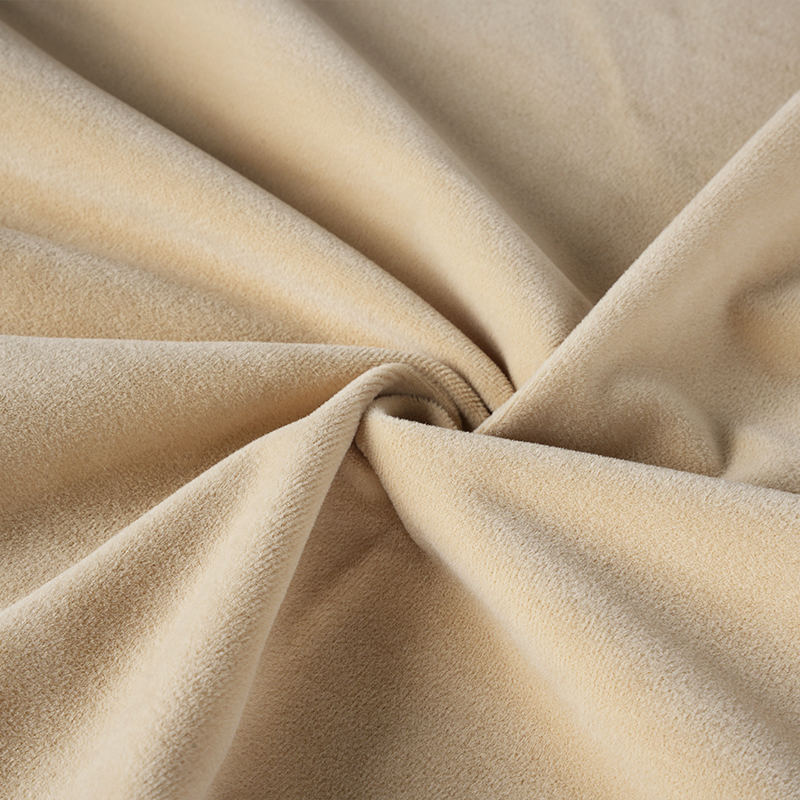
Heavy velvet has a pile structure that traps and scatters light at the surface. Velvet blackout panels typically weigh 400–600 gsm (grams per square meter), compared to 180–250 gsm for standard coated polyester. The dense pile provides inherent light-blocking without reliance on coatings, and also offers superior sound dampening—approximately 5–7 dB reduction in mid-frequency noise.
Light-Blocking Coatings: How They Work
Most modern blackout curtains achieve their opacity not through weave alone, but through back-coatings applied to a lighter base fabric. There are three principal coating types:
Comparison of the three main blackout coating technologies by properties and trade-offs
| Coating Type |
Light Block Rate |
Typical Layers |
Key Trade-off |
| Foam (Acrylic Foam) |
99–100% |
3 (white–black–white) |
Can crack after repeated washing |
| Silver/Metallic Thermal |
95–99% |
2 |
Metallic back; less decorative |
| Triple-Weave (No Coating) |
99–100% |
3 woven layers |
Heavier; higher cost |
Triple-Layer Foam Coating (3-Pass)
The industry-standard construction for budget and mid-range blackout panels. The coating is applied in three passes: a white acrylic base layer, a black light-blocking middle layer, and a white or colored finishing layer. The black center layer is the functional core—it absorbs photons rather than reflecting them, achieving near-complete opacity. This method is why many blackout curtains have a distinctly different back face than front face.
Silver Thermal Coating
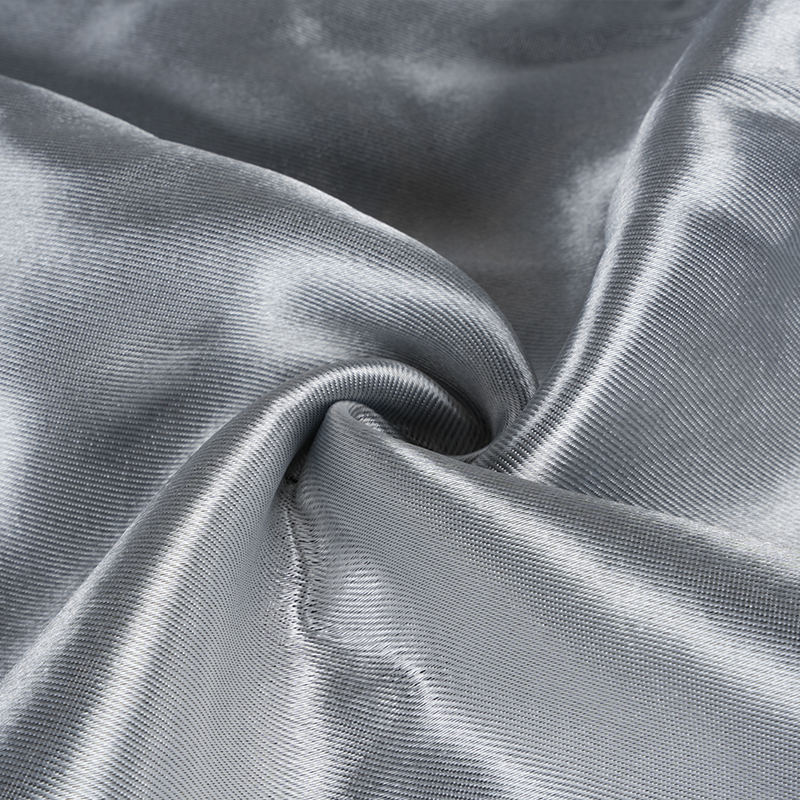
Combines light-blocking with thermal insulation by applying a metallic reflective layer to the back. Independent tests show silver-coated curtains can reduce heat gain through windows by up to 24% in summer and reduce heat loss by roughly 15% in winter. Light-blocking performance is slightly lower than full foam coatings—typically 95–99% opacity—but the thermal benefit is a meaningful bonus.
Triple-Weave Construction (Coating-Free)
A structurally different approach: three separate layers of yarn are woven together during manufacturing, with a dark middle layer sandwiched between two outer face layers. No chemical coating is used, making these curtains more durable through washing cycles and entirely coating-crack-free. Brands like Deconovo and Eclipse use this method for their premium lines. The trade-off is weight—typically 250–350 gsm—and a higher price per panel.
How Light Is Actually Blocked: The Physical Mechanisms
Blackout fabrics interrupt light transmission through one or more of three physical mechanisms:
- Absorption: Dark pigments (especially carbon black in the middle layer) convert photon energy into heat rather than allowing transmission. This is the primary mechanism in foam-coated blackouts.
- Reflection: Metallic silver coatings bounce light back toward the window before it penetrates the fabric. Thermal blackout curtains rely heavily on this mechanism.
- Scattering and weave density: In triple-weave and velvet constructions, the tight interlocking of fibers leaves no direct optical pathway through the fabric. Light that enters one side is repeatedly scattered until it loses directional transmission entirely.
In practice, most high-performing blackout curtains combine at least two of these mechanisms. A 3-pass foam curtain uses both absorption (black layer) and surface reflection (white outer layers bounce back residual light).
Blackout vs. Room-Darkening: What the Difference Actually Means
These terms are used interchangeably in retail but describe meaningfully different performance levels:
- Room-darkening: Typically blocks 85–99% of light. A visible glow may appear around panel edges or through the fabric when bright sunlight hits. Common in single-layer coated polyester panels sold below $25.
- True blackout: Blocks 99–100% of light through the fabric itself. However, no curtain eliminates all room light on its own—light still enters via gaps at the rod, sides, and bottom. Achieving a fully dark room requires blackout fabric plus side returns or a curtain track that seals against the wall.
The ANSI/AATCC 171 standard and the NFPA 701 flammability standard are the two main certifications applied to blackout fabrics in the US market. Products certified to these standards have been tested for both performance and safety.
Additional Properties: Thermal, Acoustic, and Care Considerations
Thermal Insulation
All blackout curtains provide some thermal benefit simply because they add a physical layer between the room and the window. Heavy triple-weave panels rated at 300+ gsm can reduce window-related heat loss by up to 25% compared to an uncovered window, according to the US Department of Energy's guidance on window treatments. Silver-coated panels add reflective insulation on top of this.
Sound Dampening
Blackout curtains are not acoustic panels, but their density provides measurable noise reduction. Typical polyester blackout panels offer a 2–4 dB reduction in mid-frequency sound. Velvet blackout curtains—with their thick pile—can reach 5–8 dB reduction, which is perceptible as a noticeable quieting of traffic or street noise.
Washing and Durability
This is a critical distinction between coating types:
- Foam-coated panels: Machine washable on gentle/cold, but the coating can begin to peel or crack after 20–30 washes. Air-drying is strongly recommended.
- Triple-weave panels: More wash-resistant since there is no coating to delaminate. Typically rated for standard machine wash cycles.
- Velvet: Usually requires dry cleaning or very gentle hand-washing to preserve the pile structure.
Choosing the Right Blackout Fabric for Your Application
The right fabric depends on your primary need:
Recommended blackout fabric type matched to common use cases and priorities
| Use Case |
Best Fabric Type |
Why |
| Bedroom / sleep quality |
3-pass foam coated polyester |
Full opacity, affordable, wide color range |
| Home theater |
Triple-weave or velvet |
Maximum opacity + sound dampening |
| Energy savings (hot climate) |
Silver thermal coated |
Reflects solar heat before it enters the room |
| Nursery / children's room |
Triple-weave polyester |
Washable without coating degradation |
| Shift worker / daytime sleep |
3-pass foam + wall-sealing track |
Fabric + installation together eliminate edge gaps |
No matter which fabric you choose, remember that the fabric's light-blocking rating only applies to the cloth itself—gaps at the curtain rod, sides, and floor can easily let in enough light to undermine even a 100% blackout fabric. Pairing the right fabric with proper mounting hardware is as important as the material specification.

 English
 Español
 عربى
عربى

 Leave a message
