Not all blackout curtains are created equal. The main types of 100% blackout curtains fabric include triple-weave fabric, foam-backed fabric, coated blackout fabric, velvet blackout fabric, and polyester blackout lining fabric — and each performs differently in terms of light blocking, insulation, durability, and aesthetics. Choosing the wrong type means dealing with light gaps, poor thermal performance, or fabric that degrades within a year. This guide breaks down every major type and tells you exactly which one fits your situation.
What "100% Blackout" Actually Means in Fabric Terms
The term "100% blackout" refers to a fabric's ability to block all measurable light transmission — achieving a light reduction rating of 99.9% or higher when tested under ASTM or BS standards. This is distinct from "blackout" or "room darkening" curtains, which typically only block 85–99% of light and still allow visible light bleed around edges or through the fabric weave.
True 100% blackout performance is achieved through one of three construction methods:
- Dense multi-layer weaving — tightly interlocked yarns that leave no gaps for light
- Back coating or lamination — a layer of acrylic, foam, or rubber applied to the reverse side
- Combination construction — a decorative face fabric bonded to a separate blackout lining
Understanding which method is used in a given fabric type is key to predicting its long-term performance and limitations.
Triple-Weave Blackout Fabric
Triple-weave fabric — also called three-pass fabric — is constructed from three bonded layers: typically two outer layers of polyester or a polyester-cotton blend sandwiching a core black yarn layer. The middle black layer is what provides total light blockage. No coatings or chemical treatments are used; the light-blocking performance comes entirely from the weave structure itself.
Key Performance Characteristics
- Light blocking: 99.9–100% when properly installed with no edge gaps
- Thermal insulation: moderate — reduces heat transfer but not as effective as foam-backed types
- Durability: high — performance does not degrade over time since there is no coating to peel or crack
- Washability: machine washable in most cases, making maintenance straightforward
- Weight: medium — drapes well without being excessively heavy
Best for: bedrooms, nurseries, home theaters, and any room where consistent, long-term blackout performance is the top priority. This is the most popular choice for residential use because it balances performance, aesthetics, and longevity without the drawbacks of chemical coatings.
Foam-Backed Blackout Fabric
Foam-backed fabric features a face fabric — usually polyester or a woven blend — bonded to a layer of dense acrylic or polyurethane foam on the reverse side. The foam layer simultaneously blocks light, reduces sound transmission, and provides significant thermal insulation.
Key Performance Characteristics
- Light blocking: 100% — among the most complete blackout performance available
- Thermal insulation: excellent — can reduce heat loss through windows by up to 25% in cold climates
- Noise reduction: moderate — the foam absorbs some sound energy, useful in noisy urban environments
- Durability: moderate — foam backing can crack, flake, or delaminate after 3–7 years, especially with frequent washing or UV exposure
- Washability: limited — most foam-backed curtains require dry cleaning or very gentle hand washing
Best for: rooms where thermal efficiency and energy savings are a priority alongside light blocking — such as rooms with large single-pane windows, homes in extreme climates, or rental properties where heating costs are a concern. Less ideal if you need to wash curtains frequently.
Coated Blackout Fabric (Acrylic or Rubber Back-Coated)
Coated blackout fabrics use a base woven fabric — often 100% polyester — with one, two, or three passes of acrylic or rubber coating applied to the back. The number of coating passes directly correlates to blackout performance: one-pass reduces light by around 50–70%, two-pass by 85–95%, and three-pass achieves true 100% blackout.
Three-pass coated fabric typically uses white as the first pass (for heat reflection), black as the second pass (for light absorption), and white again as the third pass (for a clean interior appearance).
Key Performance Characteristics
- Light blocking: 100% (three-pass only) — verify the pass count before purchasing
- Thermal insulation: good — the white outer pass reflects solar heat effectively
- Durability: moderate — coatings may crack or peel after repeated washing or prolonged UV exposure
- Odor: some coated fabrics emit a mild chemical smell when new that dissipates after airing
- Cost: generally lower than triple-weave or velvet — making it the most budget-friendly 100% blackout option
Best for: budget-conscious buyers, rental applications, or situations where curtains will not be washed frequently. Also widely used in commercial hospitality — hotels use three-pass coated fabric in over 70% of guest room blackout installations due to its low cost and reliable performance.
Velvet Blackout Fabric
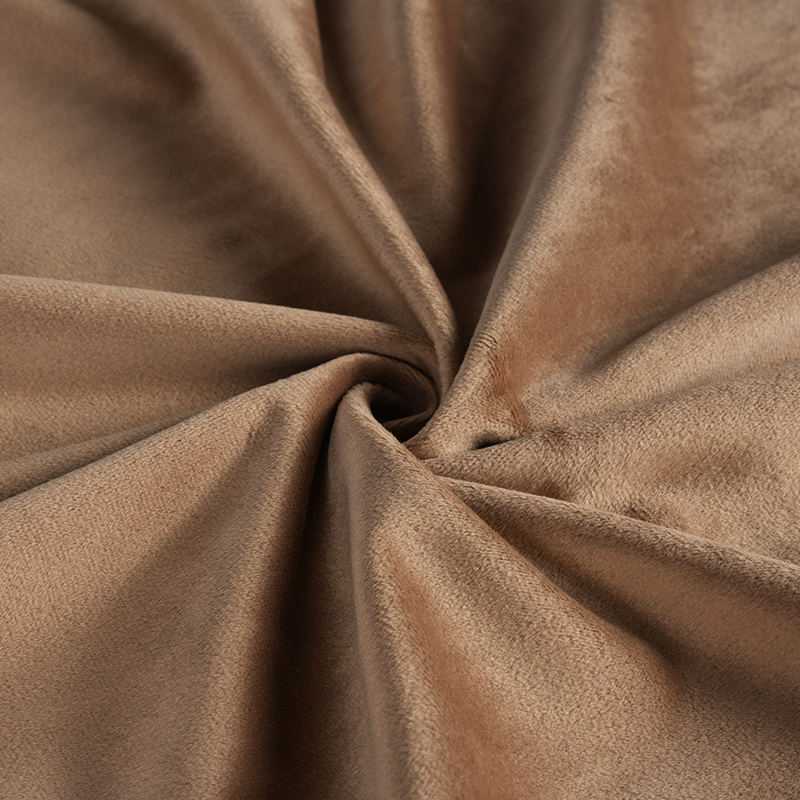
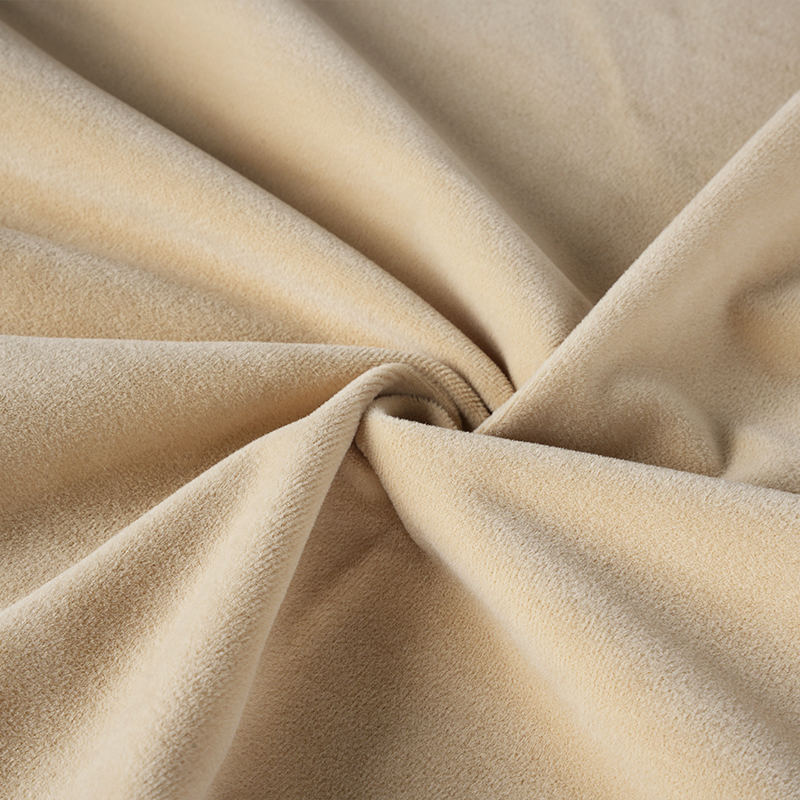
Velvet blackout curtains use a dense, cut-pile velvet face fabric — typically polyester velvet or a cotton-polyester blend — which is inherently thick and light-absorbing. Many velvet blackout curtains also incorporate a bonded blackout lining to ensure 100% light blockage, since velvet alone may not be fully opaque depending on pile density.
Key Performance Characteristics
- Light blocking: 99.9–100% when lined; verify lining is included for true blackout performance
- Thermal insulation: excellent — velvet's pile traps air effectively, providing superior insulation among decorative blackout fabrics
- Noise reduction: good — the dense pile absorbs sound waves, noticeably reducing ambient noise
- Aesthetics: premium — rich texture and appearance suitable for formal living rooms, dining rooms, and luxury bedrooms
- Weight: heavy — requires sturdy curtain rods rated for the load; typical velvet blackout panels weigh 1.5–3 kg per panel
- Maintenance: requires professional dry cleaning in most cases to preserve pile integrity
Best for: formal living spaces, master bedrooms, and home theaters where aesthetics are as important as performance. Velvet blackout fabric is the premium option — expect to pay 2–4 times more than equivalent polyester blackout curtains.
Polyester Blackout Lining Fabric
Blackout lining fabric is not a finished curtain fabric but rather a functional backing material sewn or clipped behind a decorative face fabric to add blackout performance. It is typically a tightly woven polyester or sateen-weave fabric, often with a coated or layered back. Sold by the meter, it allows homeowners to upgrade existing curtains or create custom blackout panels.
Key Performance Characteristics
- Light blocking: up to 100% depending on the lining grade chosen
- Versatility: can be used with any decorative face fabric, giving full design freedom
- Cost: significantly cheaper per square meter than full blackout curtains — often $3–$8 per meter for quality lining
- DIY-friendly: available in clip-on versions (no sewing required) or sewn-in versions for permanent installation
- Thermal benefit: adds a moderate insulation layer between the room and the window
Best for: upgrading existing curtains you already like, custom sewing projects, rental homes where you want to avoid replacing curtains entirely, and situations where design flexibility matters more than buying a ready-made solution.
Side-by-Side Comparison of All Fabric Types
| Fabric Type |
Light Blocking |
Insulation |
Durability |
Washability |
Relative Cost |
| Triple-Weave |
99.9–100% |
Moderate |
High |
Machine washable |
$$ |
| Foam-Backed |
100% |
Excellent |
Moderate |
Dry clean only |
$$ |
| 3-Pass Coated |
100% |
Good |
Moderate |
Gentle wash |
$ |
| Velvet |
99.9–100% |
Excellent |
High |
Dry clean only |
$$$$ |
| Blackout Lining |
Up to 100% |
Moderate |
Moderate |
Varies by type |
$ |
Performance and practicality comparison across the five main 100% blackout curtain fabric types
Which 100% Blackout Curtains Fabric Should You Buy?
The right fabric depends on your specific priorities. Here is a direct recommendation based on the most common use cases:
- Best overall for bedrooms and nurseries: Triple-weave polyester blackout fabric — durable, machine washable, and consistently effective without coating degradation.
- Best for energy savings and cold climates: Foam-backed blackout fabric — the thermal barrier is superior to any other type, justifying the dry-clean-only requirement.
- Best budget option: Three-pass coated polyester — widely available, genuinely effective, and the lowest cost entry point for true 100% blackout performance.
- Best for living rooms and formal spaces: Velvet blackout fabric — the aesthetics and acoustic benefits justify the premium price in spaces where appearance matters.
- Best for upgrading existing curtains: Blackout lining fabric — clip-on versions install in minutes and can transform any curtain into a functional blackout panel for under $20.
Regardless of fabric type, remember that the fabric alone does not guarantee a fully dark room. Light gaps around the sides and top of curtains can let in as much light as a poorly rated fabric. Always pair your chosen blackout fabric with ceiling-mount or wall-to-wall installation, or use a curtain with side returns, to eliminate edge bleed entirely.

 English
 Español
 عربى
عربى

 Leave a message
