Yes — 100% blackout curtains fabric can meaningfully reduce noise and improve thermal insulation, but the degree of benefit depends heavily on the specific fabric type, weight, and construction. Blackout curtains are not purpose-built acoustic or insulation products, but their dense, multi-layer construction gives them measurable advantages over standard curtains. In the right setup, they can reduce noise by up to 40% and cut window heat loss by up to 25%. Here is exactly what to expect and what drives these results.
How Blackout Curtains Fabric Reduces Noise
Sound travels as pressure waves through air and solid materials. When those waves hit a curtain, three things can happen: the sound passes through, gets reflected back, or is absorbed by the material. Dense, heavy fabrics absorb and scatter more sound energy than thin, lightweight ones — which is why blackout curtains outperform sheer or standard curtains in noise reduction.
Blackout curtains don't soundproof a room — that requires mass-loaded vinyl, acoustic panels, or double-glazed windows. What they do is reduce mid-to-high frequency ambient noise such as traffic hum, street chatter, rain, and wind. Low-frequency bass sounds (from subwoofers or heavy trucks) pass through with minimal attenuation.
Noise Reduction by Fabric Type
| Fabric Type |
Estimated Noise Reduction |
Primary Mechanism |
| Velvet blackout |
Up to 40% |
Dense pile absorbs sound waves |
| Foam-backed blackout |
20–35% |
Foam layer dampens vibration |
| Triple-weave blackout |
10–20% |
Multi-layer mass scatters sound |
| 3-pass coated polyester |
5–15% |
Coating adds minor mass |
| Standard sheer curtain |
<5% |
Negligible mass, minimal effect |
Approximate noise reduction ranges by blackout curtain fabric type based on acoustic mass and construction
To maximize noise reduction, hang curtains as close to the ceiling as possible and extend them at least 15–20 cm beyond each side of the window frame. Gaps between the curtain and wall are the primary route for sound to bypass the fabric entirely.
How Blackout Curtains Fabric Improves Thermal Insulation
Windows are one of the weakest points in a building's thermal envelope. A single-pane window has an R-value (thermal resistance) of approximately R-1, while a well-insulated exterior wall is typically R-13 to R-21. Heavy blackout curtains add an insulating air gap between the fabric and the glass, significantly reducing conductive and convective heat transfer.
According to the U.S. Department of Energy, window treatments can reduce heat loss in winter by up to 25% and reduce heat gain in summer by up to 33% when properly installed. Blackout curtains with thermal backing perform at the higher end of this range because their dense construction minimizes air circulation between the curtain and the window.
The Three Heat Transfer Mechanisms Blackout Fabric Addresses
- Conduction: Dense multi-layer fabrics slow the direct transfer of cold or heat through the curtain material itself.
- Convection: By trapping a still air pocket between the fabric and the glass, blackout curtains prevent cold air from circulating down from the window and pooling on the floor — a common cause of drafty rooms.
- Radiation: Coated and foam-backed blackout fabrics with a white or silver outer face reflect radiant solar heat back out during summer, reducing cooling loads.
Thermal Performance by Fabric Type
| Fabric Type |
Insulation Level |
Heat Loss Reduction (est.) |
Solar Heat Gain Reduction |
| Foam-backed |
Excellent |
Up to 25% |
Up to 33% |
| Velvet blackout |
Excellent |
20–25% |
25–30% |
| Triple-weave |
Moderate |
10–18% |
15–25% |
| 3-pass coated |
Good |
10–15% |
20–28% |
| Standard curtain |
Minimal |
<5% |
<10% |
Estimated thermal performance ranges for blackout curtain fabric types in both heating and cooling seasons
The Real-World Energy Savings Potential
Thermal insulation from blackout curtains translates into measurable energy bill reductions. A home with 10 single-pane windows, each approximately 1.2m × 1.5m, loses a substantial portion of its heating energy through glass. Installing foam-backed or velvet blackout curtains on all windows can realistically save between $100–$300 per year in heating and cooling costs depending on climate, window count, and local energy prices.
The savings are most pronounced in two scenarios:
- Cold climates in winter: Closing heavy blackout curtains at sunset prevents significant overnight heat loss through glass, reducing furnace run time.
- Hot climates in summer: Closing light-colored or white-backed blackout curtains on south- and west-facing windows during peak sun hours prevents solar heat gain, reducing air conditioning load by up to 7°C room temperature difference in direct comparison tests.
Installation Practices That Maximize Both Benefits
Even the best blackout fabric underperforms if installed incorrectly. Both noise reduction and thermal insulation are highly sensitive to gaps and mounting position.
Ceiling-Mount vs. Wall-Mount
Mounting the curtain rod at ceiling height — rather than just above the window frame — significantly increases both acoustic and thermal performance. A ceiling-mounted rod creates a larger trapped air pocket and eliminates the gap above the window through which warm air escapes and cold air enters. Studies show ceiling-mounted heavy curtains can improve thermal efficiency by an additional 8–12% compared to frame-mounted installation.
Panel Width and Side Overlap
Each panel should extend at least 15–20 cm beyond the window edge on each side. This eliminates the side gaps that allow both sound flanking and convective air loops. For noise reduction specifically, a side-return curtain track that wraps around the wall adds an extra layer of acoustic sealing.
Floor-Length vs. Sill-Length
Floor-length panels consistently outperform sill-length panels for both insulation and noise control. Allowing the curtain to puddle slightly on the floor (2–5 cm) creates an additional seal at the base, preventing the cold air draft that forms when a convective loop pulls air down the glass surface and under a shorter curtain.
Fullness Ratio
Curtain fullness — the ratio of total fabric width to rod width — affects both insulation and acoustic performance. A fullness ratio of 2.0–2.5x (meaning fabric is 2 to 2.5 times wider than the rod) creates natural folds that trap more air and provide a thicker acoustic barrier than flat-hung panels at 1.0–1.5x fullness.
What Blackout Curtains Cannot Do
It is important to set realistic expectations. Blackout curtains are not a substitute for acoustic treatment or window upgrades in high-demand situations:
- They do not block low-frequency bass noise — subwoofers, heavy trucks, and aircraft engines require mass-loaded materials many times denser than curtain fabric.
- They do not replace double or triple glazing — upgrading from single-pane to double-pane windows reduces heat loss by approximately 50%, far exceeding any curtain's contribution.
- They do not prevent condensation — closing heavy curtains in cold weather can actually increase condensation on the glass by reducing the window's surface temperature further; ensure adequate ventilation.
- Thermal benefits disappear when curtains are open — to achieve meaningful energy savings, curtains must be closed during the periods of maximum heat loss (night in winter) or heat gain (peak sun hours in summer).
Best Fabric Choices if Insulation or Noise is Your Priority
If noise reduction or thermal insulation is as important to you as light blocking, the fabric selection becomes straightforward:
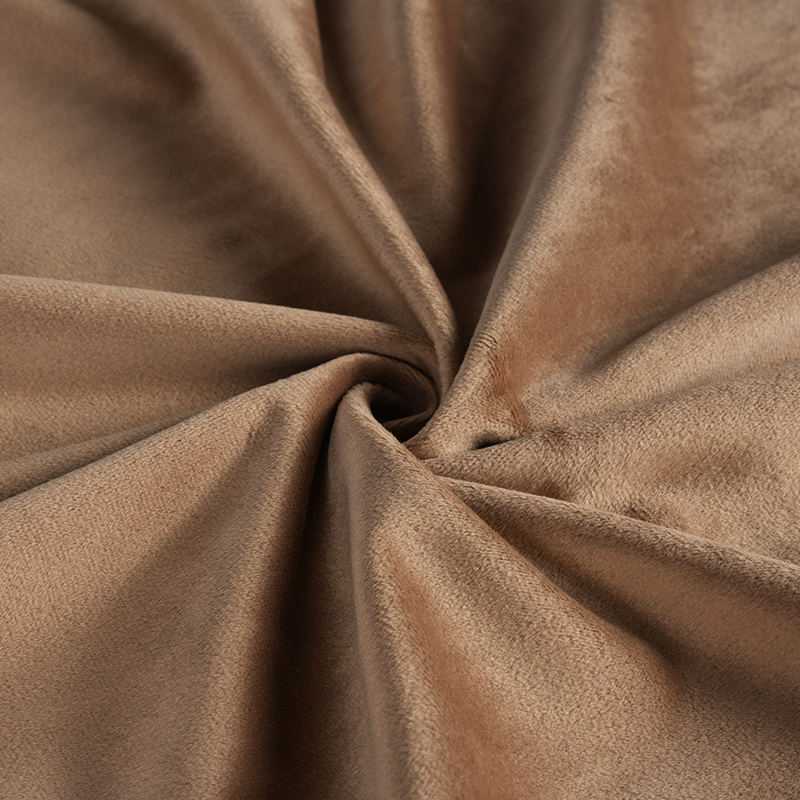
- Best for noise reduction: Velvet blackout fabric — the dense cut pile provides the highest sound absorption coefficient of any common curtain material, making it ideal for bedrooms on busy streets, home recording spaces, or urban apartments.
- Best for thermal insulation: Foam-backed blackout fabric — the polyurethane or acrylic foam layer delivers the highest R-value addition of any curtain type, making it the top choice for cold climates and rooms with large or poorly insulated windows.
- Best balance of all three benefits (light, noise, insulation): A velvet blackout fabric with an integrated foam or triple-weave backing — combining the acoustic benefits of velvet with the thermal performance of a structured backing layer provides the most complete multi-functional performance available in a single curtain panel.
For most households, triple-weave blackout curtains installed with a ceiling mount and generous side overlap offer the best combination of light blocking, moderate noise reduction, meaningful thermal benefit, and long-term durability — without the maintenance limitations of foam-backed or velvet options.

 English
 Español
 عربى
عربى

 Leave a message
