Ask a teacher who has watched a maintenance crew take down a perfectly good set of curtains, and you will usually hear the same short story: no tag, no paperwork, no curtains. In a classroom, fabric hanging beside a door or over a window is not simply decoration. It sits in a space that has to empty quickly if something goes wrong, and it is filled with children who cannot be expected to make adult decisions in an emergency. That is why school districts, fire marshals and insurers treat flame retardant curtains for classroom use as a specification item rather than a shopping preference.
We weave and finish curtain fabric for schools, hotels and contract projects, and the questions we get from teachers and facility managers are remarkably consistent: which standard applies, what paperwork proves it, and will the fabric still perform after it has been washed a few times. This guide answers those questions in plain language, with the details your fire marshal will actually ask for.
Why Classroom Curtains Attract So Much Scrutiny
Schools are classified as educational occupancies, and life safety rules for those spaces assume a supervised, orderly evacuation. That assumption gets complicated the moment loose fabric enters the room. Curtains hang away from the wall, they catch air, they sit close to windows and doorways, and once a panel is burning it can drop embers onto whatever is underneath. A single long curtain beside a corridor door can turn a manageable incident into a blocked exit.
Inspectors rarely object to curtains as a concept. They object to curtains whose behaviour in a fire nobody can predict. That is the whole reason a district purchasing document specifies flame retardant fabric rather than a colour: the school is not buying a look, it is buying a documented, repeatable behaviour under a defined test.
There is also a practical edge to this. When a curtain carries no certification, the safest decision for a school administrator is removal, not discussion. A fire-rated panel with a sewn-in label and a report on file stays where it is.
What an inspector typically checks
- A dated test report from an accredited laboratory naming the exact fabric.
- A label on the finished curtain that ties it back to that report.
- Evidence that the fabric in the window matches the fabric tested, by weight and colour.
- Installation that keeps panels out of the required exit width.
- No panel hanging over a radiator, heater or other ignition source.
- Paperwork kept at the school, not in a supplier's drawer.
Flame Retardant, Fire Resistant, Inherently FR: Sorting Out the Words
The vocabulary in this field is loose, and loose vocabulary causes expensive mistakes. Four ideas are worth separating before you compare quotes.
Inherently flame resistant
The fibre itself resists ignition. Modacrylic, aramid, wool and certain FR-modified polyester yarns behave this way. Because the protection lives in the polymer rather than on the surface, it does not wash out, which makes these fabrics attractive for schools with an active cleaning schedule.
Topically treated fabric
The woven and dyed fabric is finished with a flame retardant chemistry, usually as the last step in the finishing line. It is the most common approach for blackout and dim-out curtains because it is cost-effective and can be applied to almost any construction. Durability depends on the finish and, above all, on how the curtain is cleaned.
Back-coated or lined construction
Here the performance comes from a coating, a foam layer or a separate flame retardant liner. It is common in blackout curtains where opacity and flame retardancy are delivered by the same layer. The trade-off is weight and a slightly stiffer drape.
Flame retardant is not fireproof
Every standard in this field measures behaviour under a defined ignition source. A compliant curtain can still burn eventually. What it does is resist ignition, slow the spread of flame and avoid flaming drips, which buys the minutes an evacuation needs.
The Standards Behind the Label
Your district does not get to choose which standard applies; the jurisdiction does. The table below maps the standards you are most likely to meet, and what each one is really measuring.
Curtain flammability standards at a glance. One fabric can carry several of these reports, and which one you need depends on where the school is, not on the fabric itself.
| Standard |
Where it is used |
What it covers |
| NFPA 701, Test Method 1 |
United States; the most widely cited reference for curtains |
Flame spread on lighter-weight fabrics, judged by afterflame time, char length and dripping |
| NFPA 701, Test Method 2 |
United States; heavier or multilayer constructions |
The same principles applied to denser fabrics and lined panels |
| California Title 19, Section 1237 |
California schools and public buildings |
Flame retardancy requirements for draperies and textiles in public occupancies |
| CAN/ULC-S109 |
Canada |
Flame tests for flame-resistant fabrics and films used in buildings |
| EN 13773 |
Europe and many international projects |
A classification scheme for curtains and drapes, with Class 1 as the highest tier |
| BS 5867 Part 2 |
United Kingdom and specifications that follow British practice |
Type B and Type C ignition resistance against a smouldering cigarette or a small flame |
| ASTM E84 / UL 723 |
Occasionally required for fixed panels and wall finishes |
Surface burning characteristics: flame spread index and smoke developed index |
Two practical notes. First, a report for one colour does not automatically cover another, because dyeing and finishing can change the fabric's behaviour. Second, a certificate that is more than a few years old may be rejected if the supplier cannot show the current production is made the same way.
Choosing Fabric That Fits the Room, Not Just the Code
Compliance is the floor, not the ceiling. A classroom has real functional needs: glare control on screens and whiteboards, enough daylight to keep the room from feeling like a cave, and fabric that survives years of use without sagging or fading. Here is how the main fabric families usually map onto school spaces.
100% blackout
For media rooms, projector walls, sensory rooms and any space where stray light ruins the lesson. A coated or triple-weave construction blocks essentially all light and is usually finished to pass NFPA 701 or Title 19.
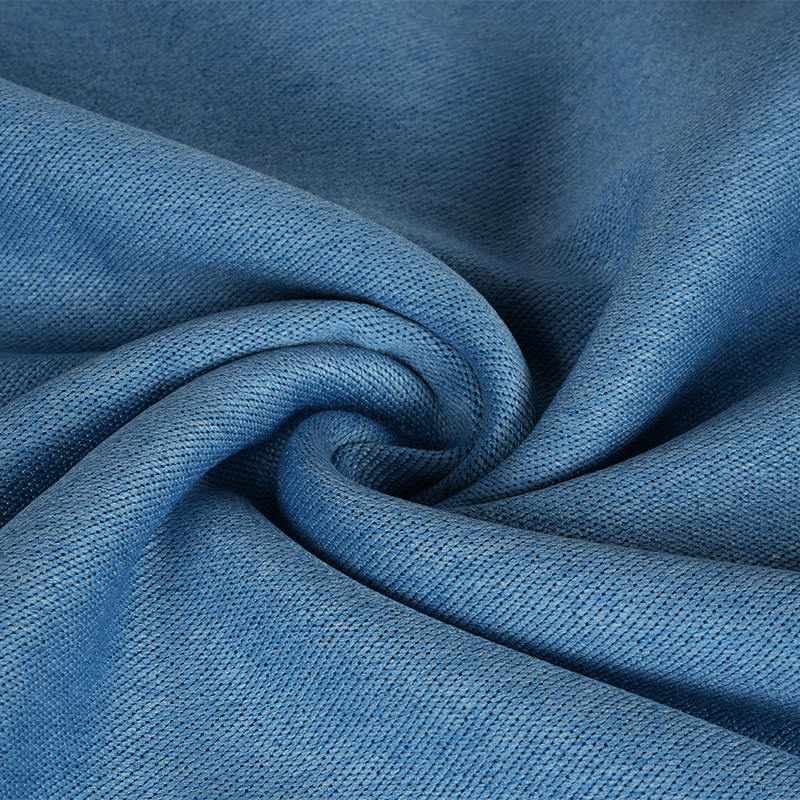
Dim-out triple weave
The workhorse for general classrooms. It takes the hard edge off afternoon sun without turning the room dark, and it hangs softly enough to look intentional rather than institutional.
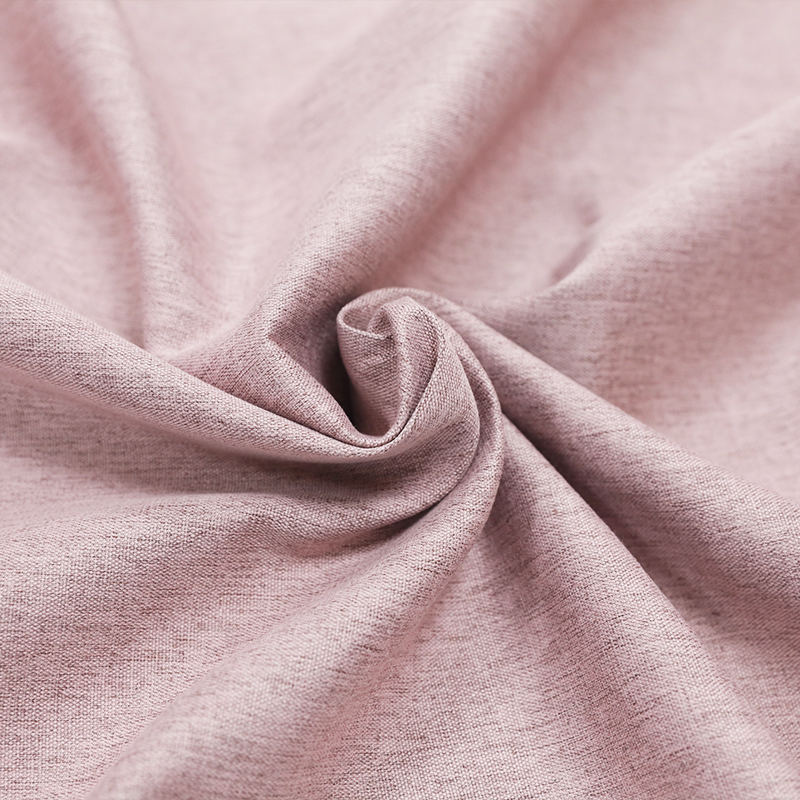
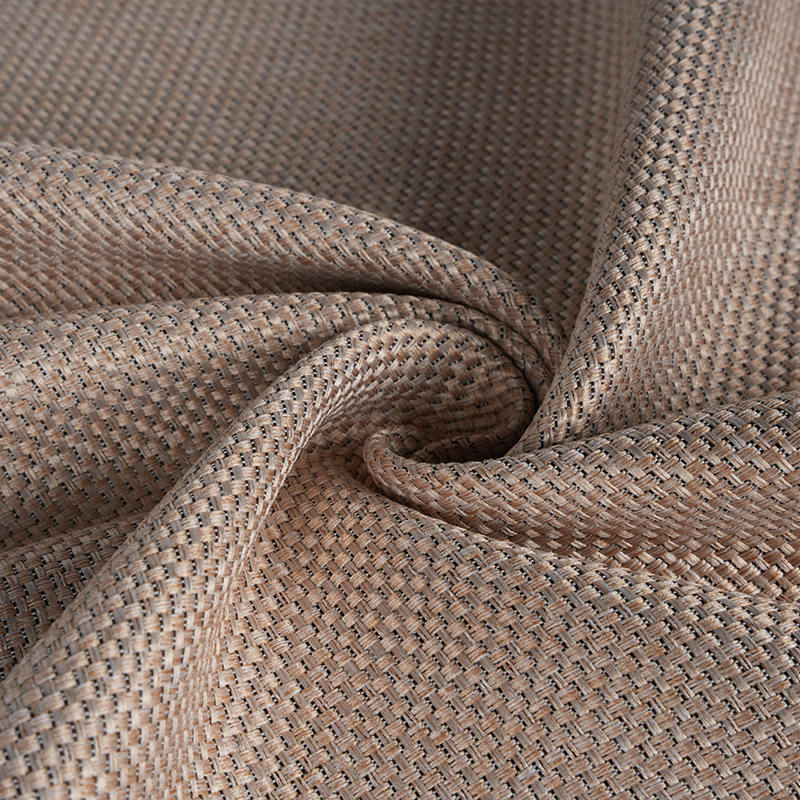
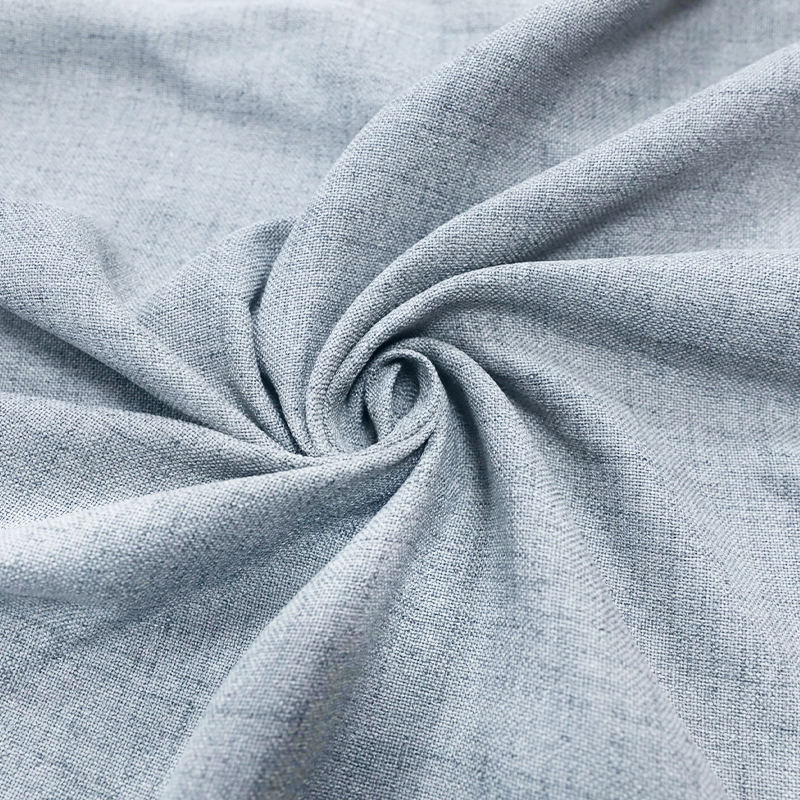
Linen-look flame retardant fabric
Reading corners, front offices, reception areas and older buildings where a flat synthetic look would stand out. The texture reads warm, and the FR performance comes from the finishing line.
Flannel and bonded constructions
Libraries, drama spaces and rooms where a softer acoustic feel matters. The denser surface absorbs a little sound and blocks light well, though it needs a firmer heading to hold its shape.
Flame retardant sheers
Corridors, stairwell windows and any place where daylight must stay but the view should be softened. Sheers rarely block light, so they are chosen for privacy and brightness rather than glare control.
Typical light blocking by fabric type
100% blackout 99%
Dim-out triple weave 90%
Flannel / bonded 85%
Linen-look FR 75%
FR sheer 35%
Figures are typical ranges, not guarantees. Coating, lining and weave density move the numbers, so always judge from a physical sample in the actual room.
Our own range follows this logic closely: a full blackout series, a linen-look dim-out series, a contract-oriented engineering series for larger projects, flannel constructions and sheers. Because we control the chain from yarn through twisting, warping, weaving and dyeing, we can finish a specific construction to the standard your district names, rather than selling whatever happens to be on the shelf.
The Paperwork That Keeps Your Curtains on the Wall
A compliant curtain without documentation is, from an inspector's point of view, an uncompliant curtain. Before you place an order, ask for these items in writing.
- A dated test report from an accredited laboratory that names the fabric, its weight and its colour.
- A certificate of compliance addressed to the school or district, not a generic marketing sheet.
- A sewn-in or permanently attached label on every finished panel, matching the report.
- Batch or roll traceability, so the panels in the building can be tied back to the production run.
- A written care sheet stating the cleaning methods that preserve the finish.
- A retained reference swatch held by the supplier, and one kept in the school's own file.
- For topically treated fabric, a clear statement of how many washes the finish is expected to survive.
- A short compliance letter the fire marshal can read in under a minute.
If a supplier hesitates on any of these, treat it as information. Reliable mills issue this paperwork routinely because it protects them as much as it protects the school.
Installation Rules That Quietly Decide Compliance
Most failed inspections we hear about are not fabric failures. They are installation failures. The same panel that passes in one room gets flagged in the next because of where it was hung and what it was hung next to.
Do
- Keep panels clear of the required exit width at doors.
- Use cordless or tensioned operating systems, especially at child height.
- Maintain clearance below sprinkler heads so spray patterns are not blocked.
- Keep fabric away from radiators, unit heaters and lab equipment.
- Mount so panels can be removed quickly for cleaning or replacement.
- Record the install date with the certificate.
Don't
- Hang a curtain across or over an exit door or its signage.
- Stack extra fabric at the floor where it can be stepped on or catch debris.
- Mix compliant and non-compliant panels on the same window wall.
- Substitute a different colour or weight after the sample was approved.
- Ignore science labs, art rooms and kiln areas, which carry extra risk.
- Assume the previous tenant's curtains were ever certified.
Washing, Cleaning and the Slow Loss of Protection
This is where flame retardant curtains most often lose their rating without anyone noticing. A topically treated fabric can be perfectly compliant on installation day and noticeably weaker after a few aggressive wash cycles. The fix is not complicated, but it has to be a routine.
Monthly
Vacuum panels with a brush attachment on low suction. Dust and chalk residue are mildly combustible and they dull the fabric.
As needed
Spot clean with lukewarm water and a mild soap. Avoid solvents, bleach and fabric softener, which can coat or break down a flame retardant finish.
Before any wash
Read the care code on the label. Some constructions are dry-clean only, and washing them can void the certification entirely.
After the stated number of washes
Either re-treat the fabric or replace it. Ask the mill how many cycles the finish was tested for, and write that number into the maintenance file.
Annually
Inspect every panel for fraying, sun rot, water staining and loose headings, and confirm the labels are still attached and legible.
Inherently flame resistant fabrics simplify this enormously, because the performance is part of the fibre rather than a surface finish. Where the budget allows it, they reduce the long-term paperwork burden considerably.
Specifying and Ordering: A Realistic Timeline
Schools rarely buy curtains as a one-off purchase. It is usually a summer project squeezed between budget approval and the first day of term, which makes lead time the quiet risk in the whole plan. A sensible schedule looks like this.
Week 0: Measure and count
Record window widths and heights, mounting type, and the number of panels. Decide the fullness you want, typically one and a half to two times the window width for a proper drape.
Week 1: Request samples and reports
Ask for physical swatches plus the test documentation for each candidate fabric. Hold the swatch against the actual wall in the actual light.
Weeks 2 to 3: Approve and confirm
Lock the colour, weight, heading style and operating system. Confirm the exact standard the district requires and the wording it wants on the certificate.
Weeks 3 to 5: Production
Finishing, testing and sewing. Wide fabrics reduce seams on long window walls, which is worth asking about early rather than late.
Weeks 5 to 6: Delivery and installation
Install, remove the temporary coverings, and check that every label is present and legible before the crew leaves the building.
Week 6 and beyond: File and inspect
Keep certificates, the care sheet and the installation record together, ideally in the same folder as the fire inspection paperwork.
If you are buying through a distributor, ask who actually manufactures the fabric. Panels sewn from a certified roll are straightforward to document; panels sewn from an unknown roll usually are not. As a mill that runs the full chain from raw yarn to finished, dyed fabric, we would rather answer that question at the quotation stage than during an inspection.
Frequently Asked Questions
Do all classroom curtains have to be flame retardant?
In most jurisdictions, yes, if they are loose-hanging fabric in an educational occupancy. Requirements usually come from the local fire code, which in turn references a recognised test standard. Some districts apply stricter rules than the code minimum, so confirm the local expectation before ordering.
What does an NFPA 701 reference on a curtain label actually mean?
It means a laboratory tested that fabric construction against the standard and it passed, judged on afterflame time, char length and whether burning material dripped. The report should be dated and should name the fabric, not just the standard.
Are blackout curtains automatically flame retardant?
No. Blackout describes light transmission, not fire behaviour. Many blackout fabrics are finished to pass flame tests, but the two properties come from different parts of the construction, and a supplier must be able to prove the second one separately.
Can I wash flame retardant curtains without losing the rating?
Often, but not always, and it depends entirely on the finish. Follow the care code, avoid bleach and fabric softener, and respect the wash count the mill states for the treatment. Beyond that number, the fabric should be re-treated or replaced.
How do I prove compliance to a fire marshal?
With three things together: a dated test report, a certificate of compliance, and a label on the installed panel that ties the two to the fabric in the window. Keep a retained swatch as well, so the panel can be matched to the tested construction.
What is the difference between inherently FR and treated fabric for a school?
Treated fabric relies on a surface finish and therefore needs a care routine to keep its performance. Inherently FR fabric resists ignition because of the fibre itself, so performance survives cleaning. Treated fabric usually costs less; inherently FR fabric usually costs less to maintain.

 English
 Español
 عربى


 Leave a message
