Flame retardant blackout curtains do two jobs at once. They keep daylight, street lighting and screen glare out of a room, and they slow the spread of fire if something goes wrong. In a hotel, a hospital ward, a school hall, a cinema or an office tower, that combination is rarely a luxury. It is usually one of the conditions a building has to satisfy before it can be signed off and used.
We have been weaving and finishing curtain fabric in Shaoxing for many years, and FR blackout work is the part of the range our customers ask about most. It is easy to buy a fabric described as "flame retardant". It is much harder to buy one whose test report actually matches the roll in the container, the heading you plan to sew, and the cleaning routine the end user will really follow. As a curtain fabric manufacturer running the full chain from yarn twisting and warping through weaving, dyeing and finishing, we see both sides of that problem every week.
What Flame Retardant Blackout Curtains Actually Do
Two separate properties are being combined here, and it helps to keep them apart in your own mind before you start comparing quotations.
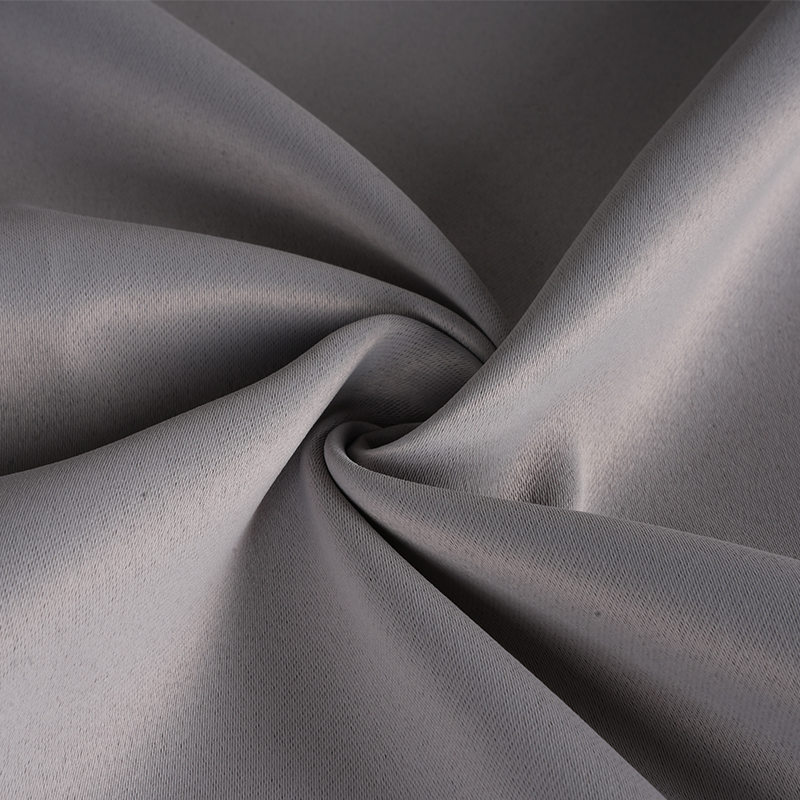
Blackout is about light. A good blackout fabric blocks the great majority of visible light and suppresses the glow that creeps around the edges of a window. Three approaches are common in the trade: a dense triple weave that packs black and coloured yarns tightly enough to trap light; a woven base finished with a foam or acrylic back coating; and a lighter decorative cloth paired with a separate blackout lining.
Flame retardancy is about time. A flame retardant fabric still burns. What it does is resist ignition longer, spread flame more slowly, and often drip less than an untreated cloth of the same weight. That extra time is what the fire strategy of a building leans on. It gives occupants a chance to leave the room and gives detection or suppression systems a chance to work.
It is worth saying plainly that no curtain is fireproof. "Flame retardant", "FR" and "fire retardant" all describe a fabric that performs better in a defined test, not a fabric that cannot burn. Anyone promising more than that is overstating what textile technology can deliver.
Three Manufacturing Routes to an FR Blackout Fabric
When a specifier asks us for flame retardant blackout curtain fabric, there are usually three routes to choose from, and each one behaves differently in service.
Inherently flame retardant yarns
Here the FR performance is built into the fibre itself, typically through modified polyester, modacrylic or a carefully balanced blend. The fabric does not depend on a surface treatment, so the protection does not wash out or fade with the years. It is the most durable option and usually the safest choice where laundering is frequent and the curtains will stay up for a decade.
FR finishing of a woven cloth
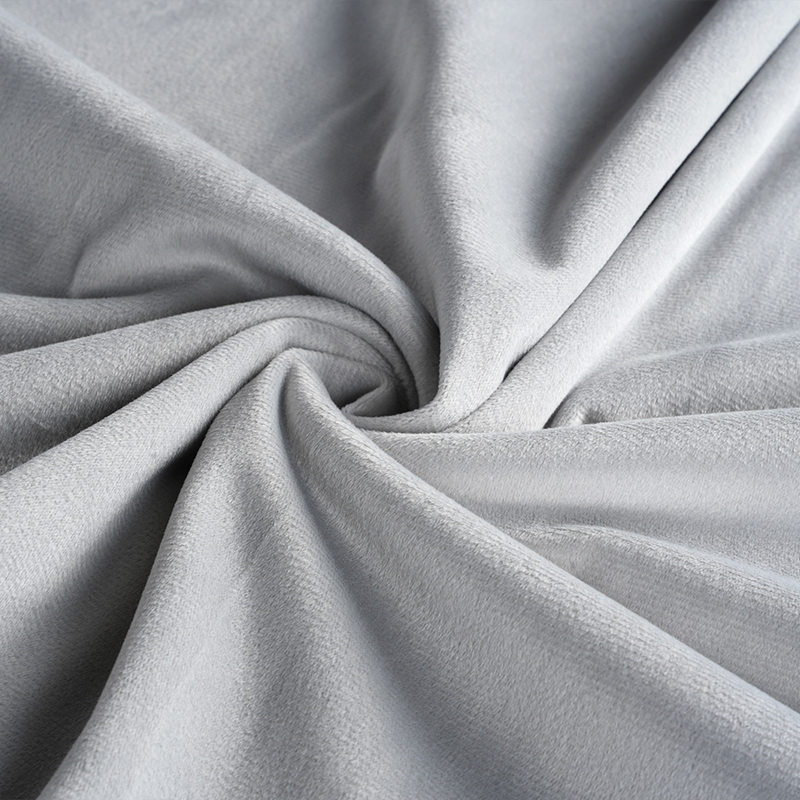
The base fabric is woven, dyed, then padded with a flame retardant chemistry and cured. This route gives excellent control over colour and hand feel and suits lighter decorative qualities. Its performance depends on how deeply the finish penetrates the yarn and on how the finished curtain is cleaned. Repeated hot washing can gradually reduce the effect.
FR back coating combined with blackout
A single pass can deliver both darkness and FR performance: a foam or acrylic coating that blocks light, formulated with flame retardant additives. It is efficient and gives a very flat, opaque result. The trade-offs are weight, drape and the fact that the coating must be tested as supplied. One mill's coating is not automatically equivalent to another's.
Table 1: A comparison of the three main manufacturing routes to flame retardant blackout curtain fabric.
| Route |
Light blocking |
Source of FR performance |
Behaviour after repeated washing |
Typical use |
| Inherently FR yarn |
High, dense triple weave |
Built into the fibre |
Stable |
Hotels, healthcare, heavy contract use |
| FR finishing |
Medium to high, often lined |
Chemical finish after dyeing |
May weaken with harsh washing |
Decorative and mid-weight drapery |
| FR back coating |
Very high |
Flame retardant additives in the coating |
Depends on coating adhesion |
Cinemas, offices, cost-sensitive projects |
Standards and the Test Evidence Worth Requesting
Fire regulations for curtains differ by country, by state and often by building type, so the correct first move is always to ask the specifier which standard governs the project. In practice, most FR drapery enquiries we handle refer to one of a handful of methods.
Table 2: Common flammability standards referenced by buyers of flame retardant blackout curtain fabric.
| Standard |
Region |
What it usually covers |
| NFPA 701 |
United States |
Flame propagation of draperies and window treatments |
| California Title 19 |
United States, state level |
Flame retardant requirements for drapery in certain occupancies |
| ASTM E84 |
United States |
Surface burning characteristics of building materials |
| EN 13773 and EN 13501-1 |
Europe |
Burning behaviour of curtains and reaction to fire classes |
| BS 5867 Part 2 |
United Kingdom |
Flammability of curtain and drape fabrics, Type B and Type C |
| IMO FTP Code Part 7 |
International, marine |
Vertically supported textiles and films on ships |
| GB 8624 |
China |
Burning behaviour classification of building materials, textiles included |
A test report is only useful if it belongs to the fabric you are actually buying. Ask for the report reference, the mill and production batch it covers, the weight and construction that were tested, and whether the specimen was tested as supplied or after laundering. If the curtains will be washed during their life, request results after the number of cycles the end user will realistically run. Batch-linked documents, not a generic certificate from three years ago, are what a fire officer or a project consultant will accept.
Matching the Fabric to the Space
Hotels and hospitality
Guest rooms need near total darkness for sleep, a hand feel that photographs well, and a fabric that survives commercial laundering without going limp or shiny. A dense FR weave with a separate lining is the usual compromise, and the heading style matters as much as the cloth. Pinch pleat and wave headings hang better on heavy FR fabric than light eyelet work.
Healthcare, care homes and schools
These projects tend to prioritise limited flame spread, controlled smoke and easy maintenance. Fabrics that can be wiped or laundered at higher temperatures are preferred, and loose surface fibres are best avoided. In wards and classrooms, the blackout layer is often needed for daytime rest or projection, so the same cloth carries both duties.
Offices, cinemas and auditoria
Large drops and wide panels put a different kind of pressure on the fabric. Dimensional stability, colour consistency across very long runs, and enough weight to hang straight are the real questions. Coated FR blackouts handle wide widths well, and their mass also absorbs a useful amount of reflected sound, which is a welcome side effect in a screening room.
Homes
Residential buyers often choose FR blackout fabric voluntarily, for windows close to a wood stove or kitchen range, or simply for peace of mind in a house with young children. Here the priorities flip towards softness, colour choice and a natural drape, so an FR-treated decorative weave or a lined mid-weight cloth is usually a better fit than a heavy coated blackout.
Care, Cleaning and Long-Term Performance
How a curtain is cleaned decides how long its FR performance lasts. As a rule, mild detergent, low temperature and gentle agitation protect both the blackout layer and the FR system. Chlorine bleach and strong alkaline detergents should be avoided on any FR fabric, coated or treated, because they attack the chemistry and the coating binder alike.
Dry cleaning is the safer route for coated and heavily finished cloths. Vacuuming regularly with a soft brush head removes dust that otherwise holds odour and dulls the fabric surface. Prolonged direct sunlight, high humidity in coastal installations, and sharp folding during storage all shorten service life. For contract work, it is sensible to keep a spare roll from the same batch so that damaged panels can be replaced without a colour mismatch.
A Practical Sourcing Checklist
When you are comparing suppliers for flame retardant blackout curtains, the questions below separate a reliable mill from a hopeful trader.
- Confirm the standard and the classification the project actually requires, in writing.
- Request a batch-linked test report, and check the weight, construction and colour it refers to.
- Ask whether the FR performance is inherent, finished or coated, and how it reacts to washing.
- Test the physical basics yourself: weight per square metre, usable width, shrinkage, colourfastness to light and rubbing.
- Check hand feel, drape and light leakage on a full drop, not on a swatch held against a window.
- Agree minimum order quantity, lead time, roll length tolerance and packing method before the order is placed.
- Ask about batch consistency if the project will be delivered in several shipments over many months.
We produce curtain fabric on a vertically integrated line, from raw yarn through twisting, warping, weaving, dyeing and finishing, with daily capacity of around 300,000 metres and annual output above 50 million metres. That scale is what allows us to hold a specification steady across repeat orders, whether the destination is a hotel in Dubai, a clinic in Germany, a school in Australia or a distributor in the United States. If you would like to see how we approach FR blackout construction, you are welcome to review our blackout curtain fabric collections and then send us your performance target, width and colour requirement. We will tell you honestly which route fits, and which one does not.

 English
 Español
 عربى


 Leave a message
