When a hotel chain orders commercial curtains for a 300-room renovation, the specification usually starts with one number: the blackout rate. But the fabric behind that number determines whether the curtains still perform acceptably after three years of daily cycles, professional steam cleaning, and constant sunlight on south-facing windows. Commercial curtains are not larger versions of residential drapes. They are engineered products, ordered in bulk, installed on heavy-duty track systems, and held to measurable performance criteria. Every buyer sourcing curtains for hotels, offices, hospitals, schools, or public venues needs to evaluate fabric construction, coating quality, fire retardancy, light fastness, and the manufacturer's ability to deliver consistent batch quality. Here is what each of those checks involves.
What counts as a commercial curtain fabric
Commercial curtain fabrics differ from home textiles in specific, measurable ways. Understanding these differences before you request a quotation prevents expensive specification errors later.
- Heavier fabric weight, usually 280 g/m² and above, improves drape on large window spans and resists sagging.
- Coated or laminated blackout layers, rather than simple tight weaves, provide reliable light blocking.
- Higher light fastness ratings prevent noticeable fading in large glazed areas.
- Compatibility with frequent professional dry cleaning or laundering extends service life.
- Fire-retardant options are available where building codes require them.
The table below summarizes the typical thresholds purchasers use to separate residential from commercial products.
Typical specification differences between residential and commercial curtains.
| Criterion |
Residential use |
Commercial use |
| Fabric weight |
180–300 g/m² |
280–450 g/m² |
| Blackout coverage |
60–90% |
95–100% preferred |
| Light fastness |
Basic (rating 3) |
Rating 4 or higher |
| Cleaning frequency |
Occasional |
Professional cycles |
| Minimum order |
By panel or room |
By roll or project |
Fabric weight matters because heavier constructions hang better on tall windows and hold their shape over time. Blackout layers matter because a thin coating that looks acceptable in a small swatch can show pinholes and uneven coverage across a three-meter drop. Those are the details that surface during installation, not at sample approval.
Blackout levels and how to verify them
Blackout performance is usually the first requirement for commercial curtains. Meeting rooms, hotel guest rooms, hospital wards, and dormitories all need predictable light blocking. Full blackout means the finished fabric blocks essentially all incoming light, generally 99 percent or more. That level depends on the weave density, the number of coating passes, and the quality of the foam or acrylic backing.
When you evaluate a supplier, ask for the blackout rate in writing and hold a sample against direct light. A claim of 100 percent blackout should be confirmed on the finished product, not only on the greige cloth. Coating defects such as pinholes, uneven thickness, and delamination after folding become visible only after installation, which makes the coater's quality control more important than the raw cloth quality alone.
A supplier with in-house dyeing and finishing can control the coating process directly. This is why many project teams prefer to source from a curtain fabric manufacturer that owns the full production chain instead of buying through a trading intermediary.
Fabric series for different commercial spaces
Most experienced curtain fabric suppliers organize their product range into functional series, because hotels, offices, and public buildings have different priorities. A typical commercial lineup covers:
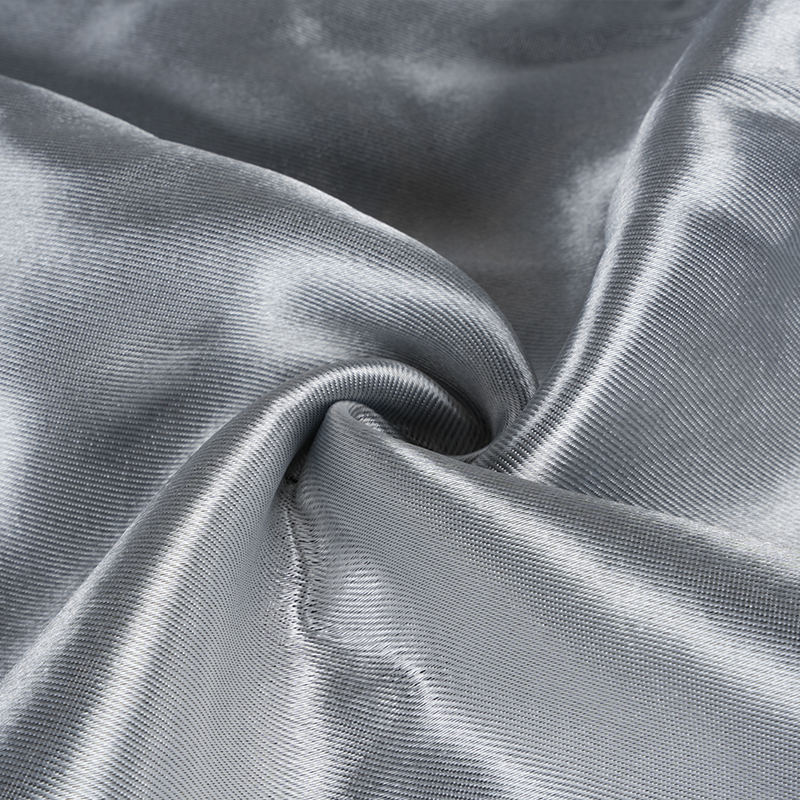
- 100% full blackout polyester series: the default choice for hotel rooms, conference centers, and auditoriums. It offers reliable light blocking, dimensional stability, and straightforward maintenance.
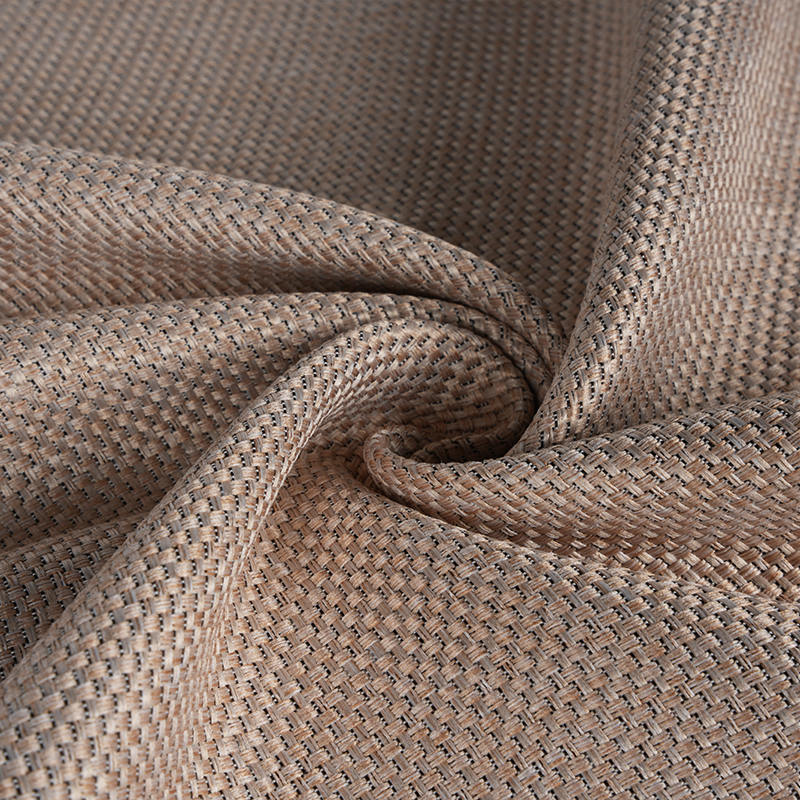
- Blackout linen series: suited to restaurant interiors, boutique hotels, and executive offices where a natural texture is wanted but light control remains essential.
- Blackout engineering series: built for large projects that need uniform specifications, consistent dye lots, and predictable delivery windows.
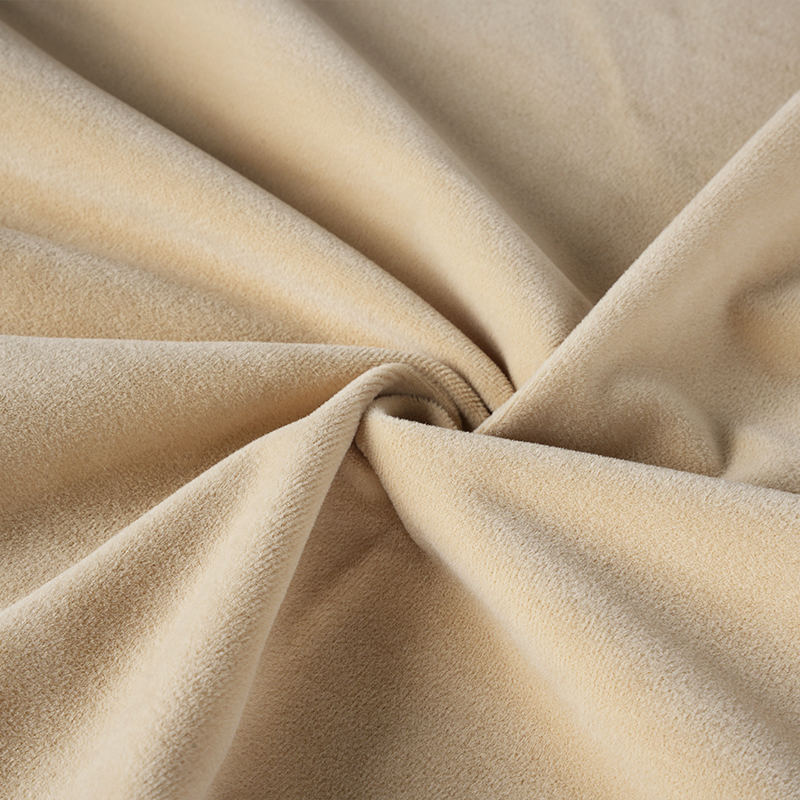
- Flannel curtain fabric series: adds thermal insulation and a soft hand feel, useful in colder climates or where curtains contribute to acoustic comfort.
- Sheer series: designed for lobbies, retail spaces, and daytime privacy without sacrificing natural light.
For a purchasing manager, the engineering series is often the safest starting point because it is made for volume orders and repeated installations. Our brand positioning overview explains how a vertically integrated supplier organizes product lines around these project requirements.
Fire retardancy and building code requirements
Commercial curtains in public buildings are frequently subject to fire-safety regulations. The applicable standard depends on the destination market: NFPA 701 in the United States, BS 5867 in the United Kingdom, EN 13773 in Europe, and GB 50222 or GB 8624 for projects in China. Importers and project specifiers should confirm which standard applies before finalizing the fabric selection.
Fire retardancy is usually achieved either by using inherently flame-resistant fibers or by applying a chemical treatment during finishing. Treated fabrics dominate the commercial curtain market because they are cost-effective and allow more design flexibility. The key question for buyers is whether the finish survives repeated cleaning. Professional laundering gradually reduces the effectiveness of some treatments, so request a certificate that covers the finished fabric and confirm the cleaning protocol the certificate is based on.
Light fastness and dye lot consistency
In commercial installations, curtains often run in long continuous bands. A subtle color difference between two dye lots becomes obvious at the seam. Light fastness, measured under standards such as ISO 105-B02, indicates how well a fabric resists fading under sunlight. A rating of 3 out of 8 is common for residential fabric; commercial projects should target rating 4 or higher, especially for facades with strong direct light.
Dye lot consistency depends heavily on the dyeing process. A manufacturer operating an integrated chain, where twisting, warping, weaving, and dyeing are controlled under one roof, can match batches more consistently than a trader who assembles fabric from several different mills. In practice, this means fewer on-site rejects and less rework during installation.
Production capacity and supply reliability
Large commercial projects place heavy demands on delivery. A single hotel floor may consume several hundred meters of fabric; a full property can exceed 5,000 meters, and a chain-wide program goes further. If the supplier cannot produce and ship the complete order on schedule, the project timeline slips and costs accumulate.
A manufacturer with a daily output of 300,000 meters and annual production above 50 million meters has the production base to handle such programs. Keqiao, where the company is based, is one of China's major textile trading hubs, which shortens access to upstream yarn and accessory suppliers. When you compare quotations, ask about current production load, lead time for your volume, and how the supplier handles dye lot matching across a multi-roll order. These practical questions tell you more than any brochure.
A practical pre-order checklist
Before you commit to a commercial curtain order, confirm the following points in writing:
- Blackout rate: the tested value of the finished product, not a marketing claim.
- Fire classification: the standard that applies in the country of installation.
- Light fastness: a rating appropriate for the window orientation and climate.
- Dye lot matching: the number of rolls that will come from the same production batch.
- Shrinkage tolerance: the expected dimensional change after professional cleaning.
- Minimum order quantity: the volume needed to activate project pricing.
- Sample fidelity: finished goods should match the approved sample, not only the trial batch.
A reliable manufacturer answers these questions without hesitation. Vague responses usually indicate limited control over production. In commercial curtain procurement, the goal is not to find the cheapest price per meter. It is to ensure that the specified performance, the delivered goods, and the installation reality are the same thing.

 English
 Español
 عربى
عربى






 Leave a message
