Fire retardant curtains are one of those products nobody thinks about until a specifier, a fire officer or an insurer asks for the paperwork. Then the questions arrive all at once: which standard does the fabric meet, does the finish survive laundering, is the lining treated as well, and can the same shade be repeated across three floors of a hotel? After supplying curtain fabric into hotels, clinics, schools and shipping projects for many years, we have learned that most problems come from a mismatch between what a test report promises and how the curtain is actually used. This guide walks through what "fire retardant" really means, the standards you are most likely to meet, and the small details that decide whether a certificate still applies two years after installation.
What "Fire Retardant" Really Means
It is worth saying plainly that fire retardant does not mean fireproof. A fire retardant curtain will still char, melt or burn when a flame is held against it. What the treatment changes is how the fabric behaves around that flame: how quickly fire spreads across the surface, whether the fabric self-extinguishes once the ignition source is removed, how long it continues to glow afterwards, and how much smoke it releases. Those four behaviours, flame spread, self-extinguishment, afterglow and smoke, are what most test methods are built to measure.
There are two main routes to that performance. Some fabrics are inherently flame retardant, meaning the chemistry is part of the fibre itself and cannot be washed or dry cleaned away. Others are treated, meaning a chemical finish is applied during dyeing or finishing, often as a back coating or through a padding process. Both routes can pass the same standard, but they age differently, which is why the choice deserves a little thought rather than a quick price comparison.
Why Curtains Come Under Fire Regulation
A curtain is a large vertical surface, and that geometry matters. When a nearby furnishing or a window treatment ignites, a hanging fabric can carry flame upwards far faster than a horizontal surface would, and the dust gathered in the folds of a long drape adds fuel in the first few seconds of a fire. In a corridor, a stairwell or an escape route, where people need those seconds to get out, the difference between a self-extinguishing drape and an untreated one stops being academic. This is also why window treatments appear in fire codes long before anyone worries about the sofa.
Where Fire Retardant Curtains Are Usually Required
Requirements vary by country and by building type, but the list of spaces where flame retardant drapery is normally specified is fairly consistent:
- Hotels, guest houses and serviced apartments, particularly guest rooms and corridors
- Hospitals, clinics, care homes and sheltered housing
- Schools, colleges, libraries and student accommodation
- Offices, conference suites and training centres
- Theatres, cinemas, auditoriums and stages, where rules are usually the strictest
- Shopping centres, airports and railway stations
- Ships, ferries, caravans, marquees and other temporary structures
Even where no regulation applies, an insurer or a client's own fire risk assessment often sets the same expectation, so it is rarely wasted effort to ask the question early.
The Standards You Are Most Likely to Meet
Standards are different from certificates. A standard describes a test method and a pass level; a certificate or test report is the evidence that a particular fabric passed it. When a client sends a specification, the first job is to identify which of the following is being referenced, because a fabric that passes one test may not have been tested against another.
Common standards referenced in curtain and drapery specifications; the exact edition and test method should always be confirmed with the local authority having jurisdiction.
| Standard |
Region |
What it covers |
| NFPA 701 |
United States |
Flame propagation of textiles and films, with separate methods for lighter and heavier materials |
| California Title 19 |
California, US |
State drapery test with a registered flame certificate for public occupancies |
| BS 5867-2 |
United Kingdom |
Type B for curtains and drapes, Type C for more severe duty |
| EN 13773 |
European Union |
Classification of burning behaviour for curtains and drapes |
| DIN 4102-1 |
Germany |
Building material class B1, widely requested for interior textiles |
| IMO FTP Code Part 7 |
International shipping |
Vertically supported textiles and films used aboard ships |
| GB 8624 |
China |
Combustibility grades for building materials, with B1 as the usual interior target |
Inherently FR Fabrics and Treated Fabrics
Inherently flame retardant fabrics
Modified polyester, modacrylic, aramid, glass fibre and some wool blends carry their flame retardant properties in the fibre. Nothing washes out, so the performance you buy on day one is the performance you still have after thirty laundry cycles. The trade-offs are usually cost, a slightly narrower colour palette and a drape that feels different from conventional decor fabric.
Treated and back-coated fabrics
Treated fabric starts life as an ordinary weave that receives a flame retardant finish. It offers the widest choice of designs and textures at a lower metre price, which is why it dominates domestic and light commercial work. The catch is durability: performance depends on the finish staying where the mill put it, so cleaning method and frequency become part of the specification rather than an afterthought.
A rough comparison of the two routes to flame retardant performance; the right answer depends on how often the curtain will be cleaned and how long it must stay in service.
| Point of comparison |
Inherently FR fabric |
Treated or back-coated fabric |
| Durability of performance |
Lasts the life of the fabric |
Depends on finish and cleaning |
| Design choice |
Limited but improving |
Very wide |
| Cleaning |
Tolerant of repeated laundering |
Needs a compatible method |
| Typical cost per metre |
Higher |
Lower |
| Best suited to |
Hotels, hospitals, ships, heavy use |
Offices, homes, light contract work |
Matching the Fabric to the Room, Not Only to the Test
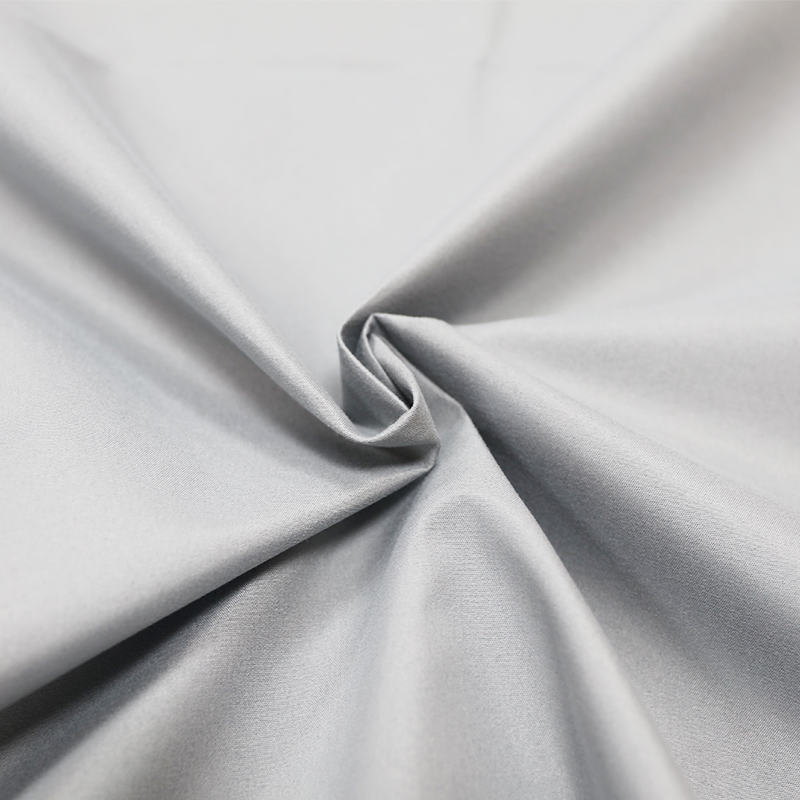
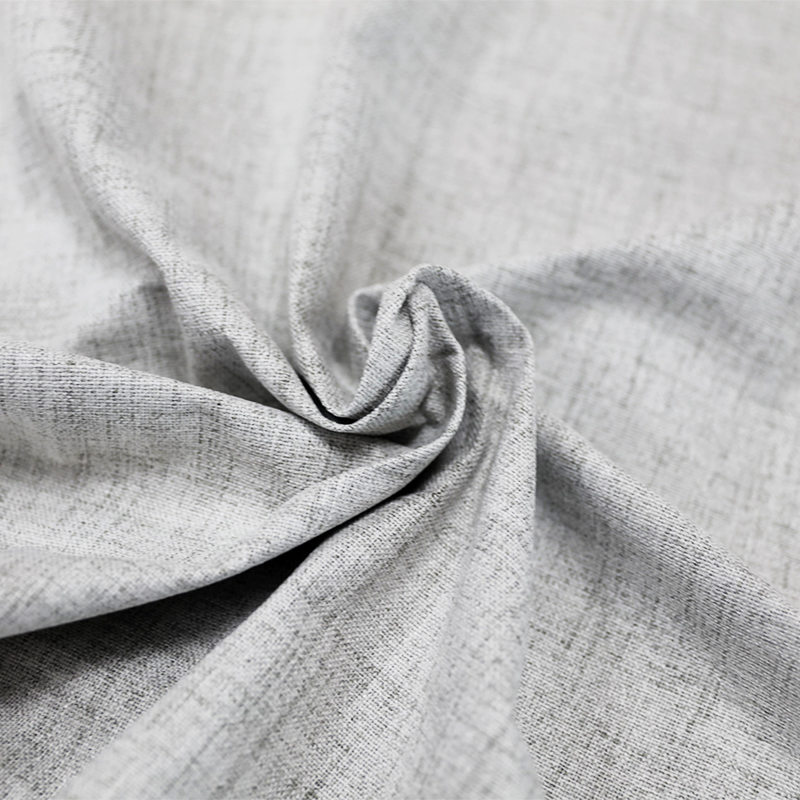
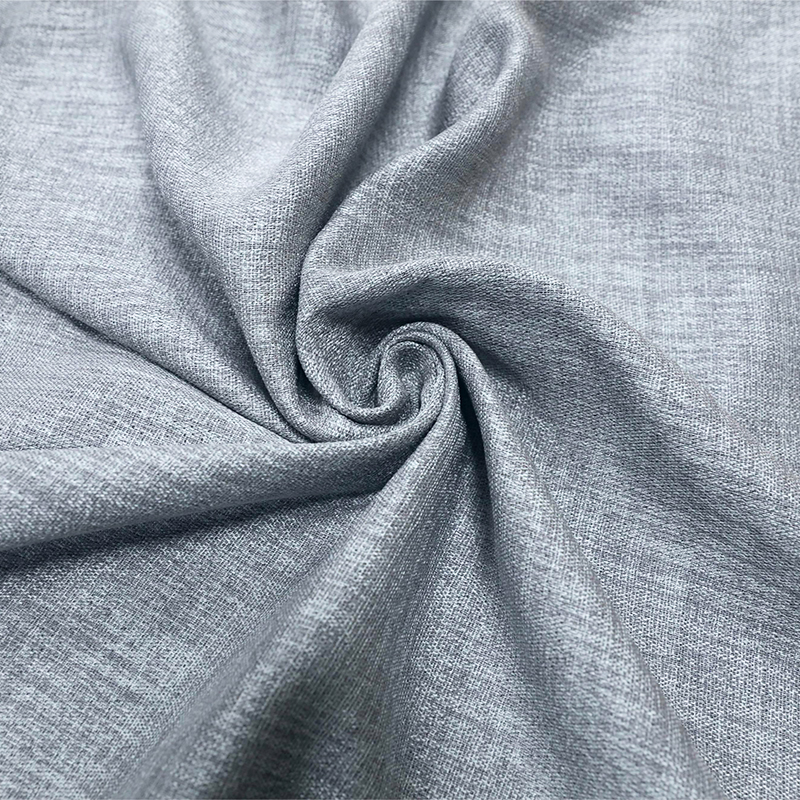
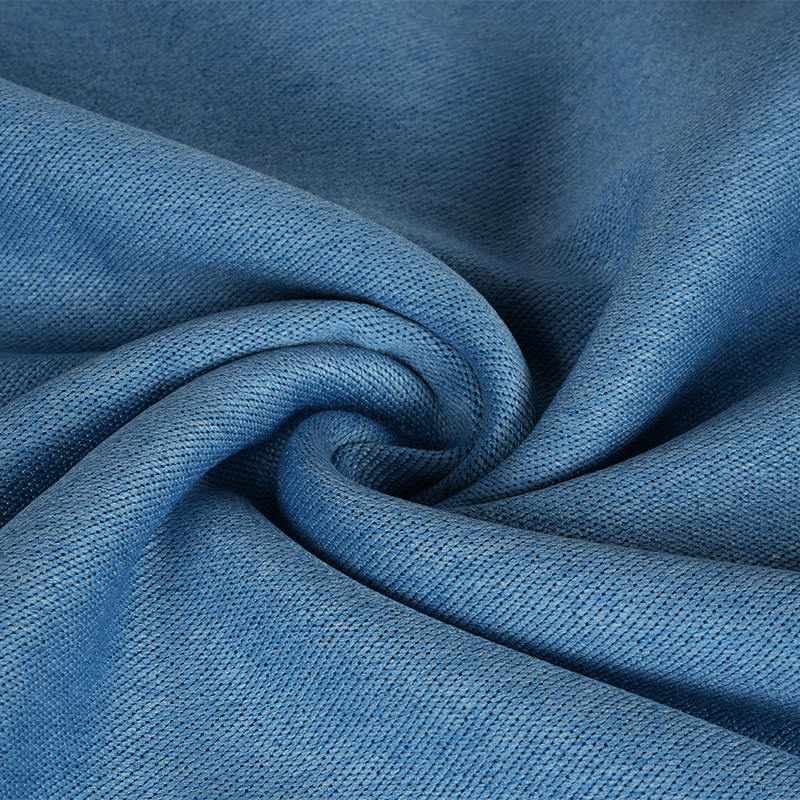
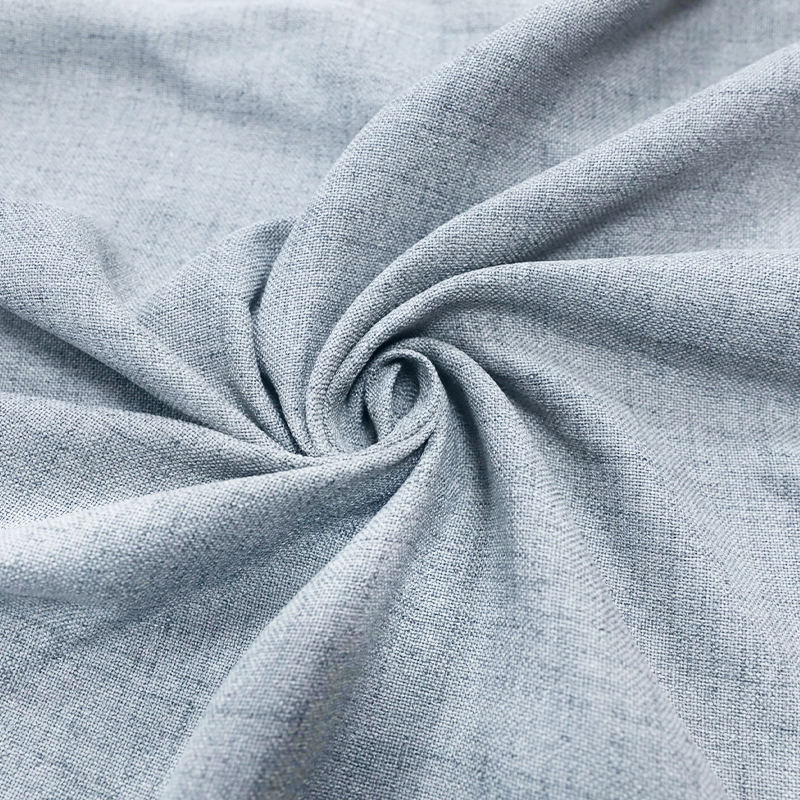
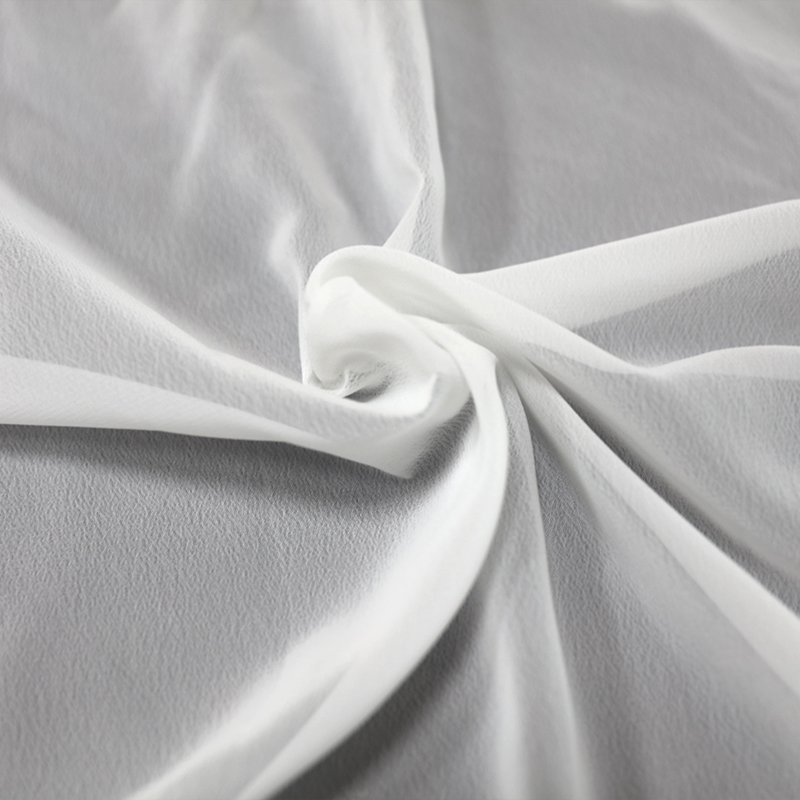
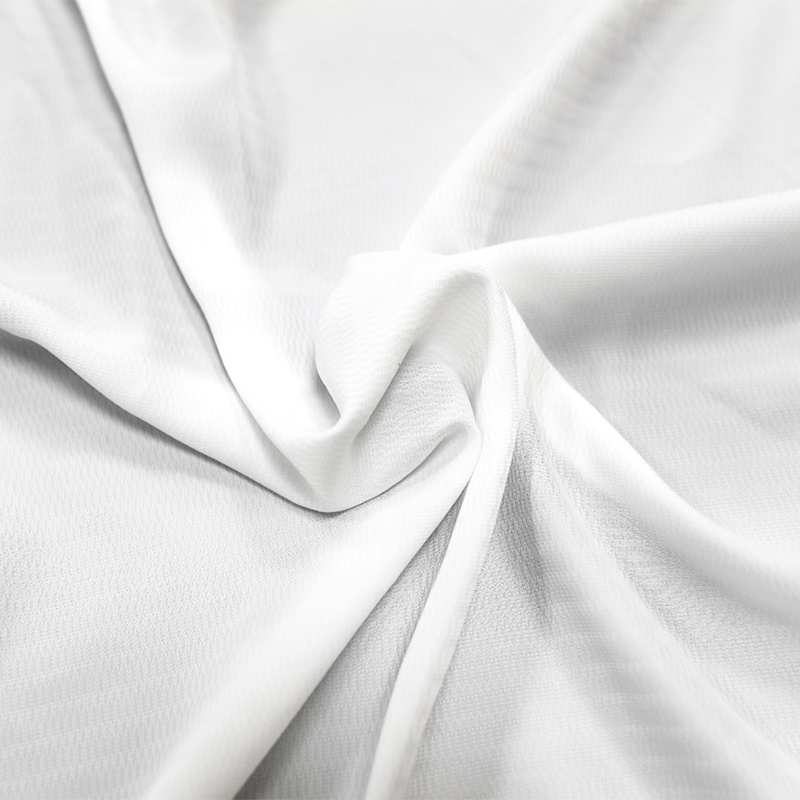
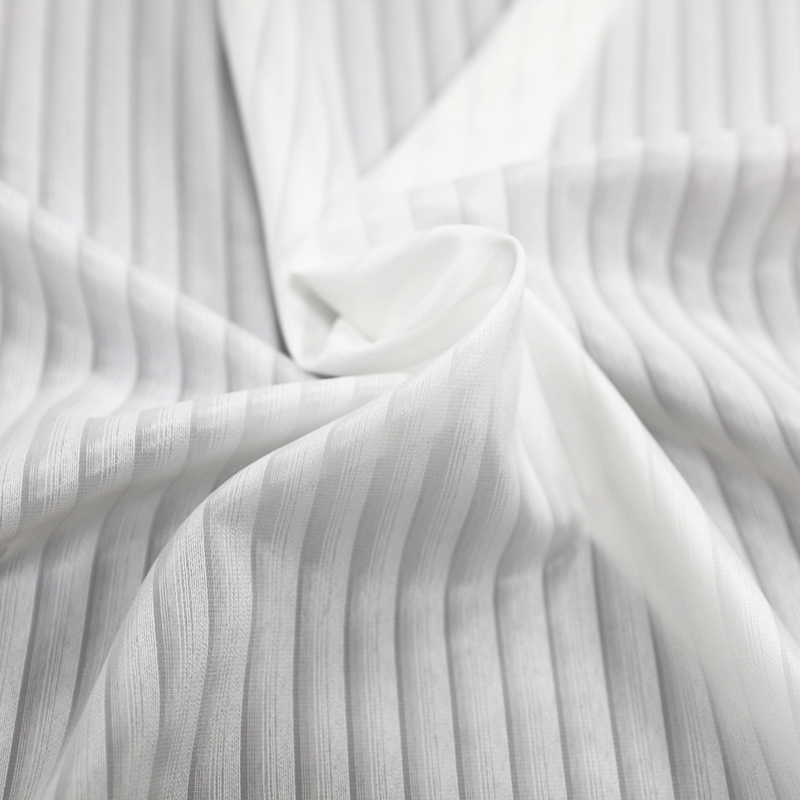
Fire performance is one column in the specification; light control, texture and cleaning are the others. Bedrooms and home cinemas usually call for a full blackout fabric so no light leaks around the edges. Living rooms and lounges often want a linen-look blackout, where the weave reads as natural but the room still darkens properly. Commercial and project work tends to suit a contract-grade construction that survives repeated cleaning and long drop lengths without bowing. Flannel brings warmth and a soft hand to winter schemes, while voiles handle daylight rooms and layering.
It also helps to think about the drop. A single-storey window can be made in almost anything; a ten-metre hotel atrium curtain needs a fabric with enough body to hang straight and enough stability that the panels still line up after the first clean.
A Practical Checklist Before You Order
- Confirm which standard and which edition the project actually requires, and who will inspect it.
- Ask for a test report that names the exact fabric reference, composition and weight, not just a generic fabric type.
- Check the date on the report and whether the tested sample is still the current production.
- Ask how many wash or dry clean cycles the performance is expected to survive.
- Confirm whether the lining and any interlining are treated, and whether they were tested with the face fabric.
- Request shrinkage figures and finished width, since flame retardant fabrics can behave differently from untreated ones.
- Ask about dye-lot consistency and lead time if the same fabric must run across several rooms or floors.
- Order a physical sample large enough for the fire officer or specifier to keep on file.
Installation and Cleaning Details That Preserve Performance
Even a well-specified curtain can lose its compliance during making up or maintenance. A few habits keep performance intact:
- Do not substitute an untreated lining behind a treated face fabric without checking the specification, as the pair may be assessed together.
- Keep sewing threads, heading tapes and fusible materials consistent with the fabric supplier's recommendation.
- On stage and theatre drapes, use the breakaway stitching or fusible seam detail required by the venue, so the cloth releases safely if someone runs into it.
- Follow the care label exactly. Chlorine bleach attacks many flame retardant finishes, and fabric softener leaves a coating that can affect both finish and hand.
- Keep test reports and cleaning records with the building's operations file, because the next inspection will ask for them.
- Where a standard requires re-testing after repeated cleaning, plan the replacement cycle into the budget rather than treating it as a surprise.
Cost, Minimum Quantities and Lead Time
Flame retardant fabric generally sits above the price of the same design untreated, and inherently FR constructions sit above treated ones. The gap narrows when you count the full service life instead of the first invoice, because a fabric that keeps its performance through many cleaning cycles may need replacing less often.
Ordering is usually driven by minimum quantity rather than by the window itself. A single room can often be supplied from stock, while a colour match across a whole project is better planned as one production run so the shades stay consistent from the first panel to the last.
Fire retardant curtains are ultimately a paperwork problem wrapped in a textile problem. Get the standard right, choose the fibre that matches how the curtain will be cleaned, and keep the test report with the building records, and most of the risk disappears before installation day.
We are a curtain fabric manufacturer based in Shaoxing, China, working from raw yarn through twisting, warping, weaving and dyeing under one roof, with a daily capacity of around 300,000 metres and annual output above 50 million metres. Our ranges cover full blackout, linen-look blackout, contract-grade constructions, flannel and voile, and they travel to buyers in the United States, Germany, Spain, Italy, Australia, Saudi Arabia, Dubai and across Southeast Asia. If you are working on a project and need to know which of our fabrics carries the test evidence your specification calls for, take a look at the curtain fabrics we produce and send us the clause you need to satisfy. We would rather answer that question early than have it surface during an inspection.

 English
 Español
 عربى


 Leave a message
